
The mechanical engineering sector in Kazakhstan continues to grow: companies are increasingly in need of technical specialists, while colleges and universities are expanding their dual education programs. Allur discussed where one can train to become a mechanical engineer today and what opportunities the industry offers.
As the company notes, mechanical engineering in Kazakhstan is now entering a new stage of development, becoming one of the key sectors. The active development of the automotive industry, the localization of production, and the adoption of modern technologies are creating a steady demand for qualified technical personnel. According to Minister of Industry and Construction Yersayin Nagaspayev, production volume in Kazakhstan’s mechanical engineering sector has grown by 21.9 percent.
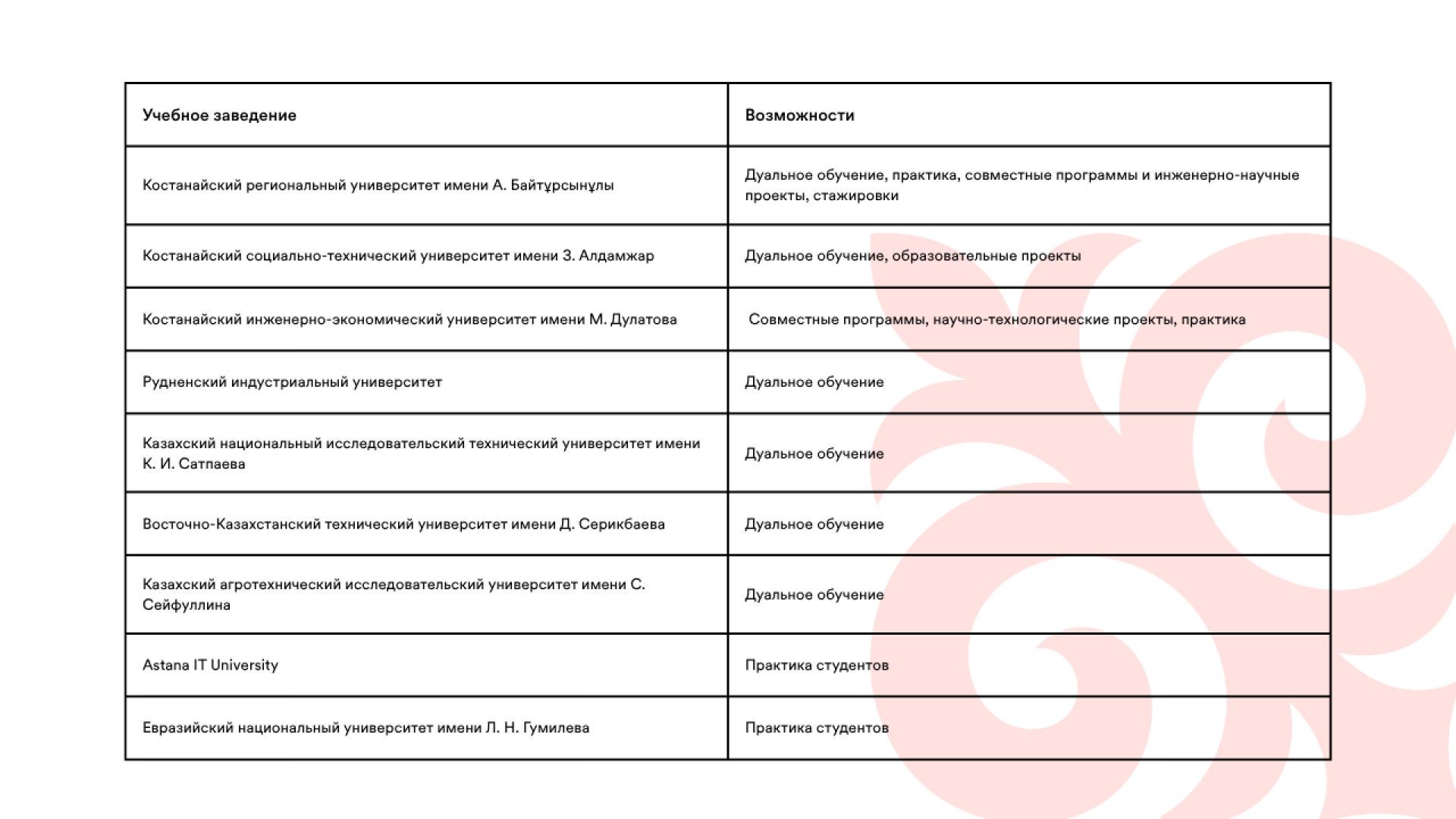
As the company notes, under these conditions, the profession of mechanical engineer is becoming particularly relevant for young people looking to enter the labor market quickly. Kazakhstan has a number of educational institutions focused on training personnel for the mechanical engineering industry. Among them, 7 colleges in the Kostanay region and 8 national colleges are part of the unified Allur dual education system. Additionally, 5 regional, 10 national, 2 national, and 5 foreign universities are the company’s main partners.
Where can you study to become a mechanical engineer?
Colleges in the Kostanay region:
National colleges:
Higher education institutions:
Training at these institutions lasts an average of two to four years and combines theoretical instruction with practical training, allowing graduates to adapt more quickly to real-world production conditions.
According to the company, business participation plays a significant role in this system. Major industrial enterprises in Kazakhstan invest in human capital development, fostering a sustainable ecosystem of collaboration with educational institutions. One of the active participants in this process is Allur—one of the country’s leading automakers. The company is interested in training specialists with modern competencies and supports initiatives aimed at developing technical education and practice-oriented training.
For example, according to the company, educational programs are being transformed in collaboration with the Allur plant, and industrial practice and teacher internship programs are being implemented. The company is actively involved in developing the material and technical infrastructure of the Kostanay Higher College of Automotive Transport, which it sponsors. The college has seen upgrades to its library, conference hall, sports facilities, and training laboratories.
In 2024, the college, in collaboration with the Allur plant, launched a “Automotive Engineering” program and developed an educational curriculum on CKD production technology. The Allur Center for Professional Competencies in CKD small-assembly production technology (welding, painting, assembly) was also opened at the Kostanay Higher College of Automotive Transport for students from all educational institutions training specialists to meet the plant’s needs.
"Mechanical engineering today is an industry where the future of the country’s manufacturing sector is being shaped. We see our mission as building a full cycle of workforce training—from career guidance for school students to dual education and employment in manufacturing. It is precisely practice-oriented education that allows young specialists to enter the profession more quickly and become part of modern industry," noted Allur Plant Director Argulan Maikonov.
The Allur team is convinced that the development of the machine-building industry directly influences the structure of in-demand professions. Today, companies need specialists capable of working with modern equipment, automated production lines, and digital production management systems. This means that college graduates receive not only basic technical training but also skills that meet the requirements of modern industry.
Thus, mechanical engineering in Kazakhstan is emerging today as a strategically important field that bridges education and industry. Choosing this profession opens up real prospects for professional growth and participation in the development of the domestic industry for prospective students. In the context of increasing integration between business and education, it is precisely these specialists who are becoming a key resource for the country’s sustainable economic development, the company emphasized.
Source: tengrinews.kz


