Mangistau’s machine-building industry has traditionally been focused on the oil and gas sector. This makes sense, as 59 oil and gas fields have been discovered on the peninsula, accounting for a quarter of Kazakhstan’s oil production. The main enterprises in the region’s machine-building sector today are: a plant for the production of screw pump systems, a plant for the production of transformers and cables, a plant for the production of pump-compressor pipes and pump rods, a plant for the production of process equipment and pipeline fittings, and the Zhanaozen plant for the oil and gas industry. Three of them will be launched this year and next, according to otpannews.kz.
Today, domestic machine building is one of the key sectors of the manufacturing industry, as well as a fundamental element of the country’s industrial development. The sector comprises 37 sub-sectors and more than 5,000 enterprises. In recent years, experts have noted steady growth in the sector: the product range is expanding, and localization and industrial cooperation are developing.
While production volume stood at 670 billion tenge in 2024, it reached a historic high of 5.7 trillion tenge in 2025, and the sector’s share of the manufacturing industry approached 20%.
Despite these growing figures, the machine-building sector faces a number of systemic challenges. These include a shortage of affordable domestic raw materials, dependence on imported metallurgical products, and a lack of stable, long-term orders from major consumers—despite the high potential of domestic enterprises, incomplete technical specifications, documentation, and drawings, as well as limited procurement volumes, are holding back manufacturers’ development. The digital divide plays a significant role. While some enterprises are actively implementing robotization, the overall robotization density in the country remains low. According to available estimates, Kazakhstan has about 9 industrial robots per 10,000 workers in the manufacturing sector, whereas the global average is approximately 162. This directly affects labor productivity and competitiveness.
Another problem is import dependence. Despite the growth in production, a significant portion of engineering products is still imported. Engineering products account for about 44% of the country’s total imports (approximately $25.5 billion). This means that the industry still has significant potential to increase domestic production and reduce import dependence.
In addition, there is a labor shortage. The industry lacks turners, millers, CNC machine operators, design engineers, process engineers, and automation specialists. Without systematic workforce training, it is difficult to ensure the transition to a deeper level of localization.
The issue of export competition is also acute. Entering foreign markets requires compliance with international standards, certification, and a service infrastructure, which entails additional investments and institutional support.
Machine Building in Mangistau
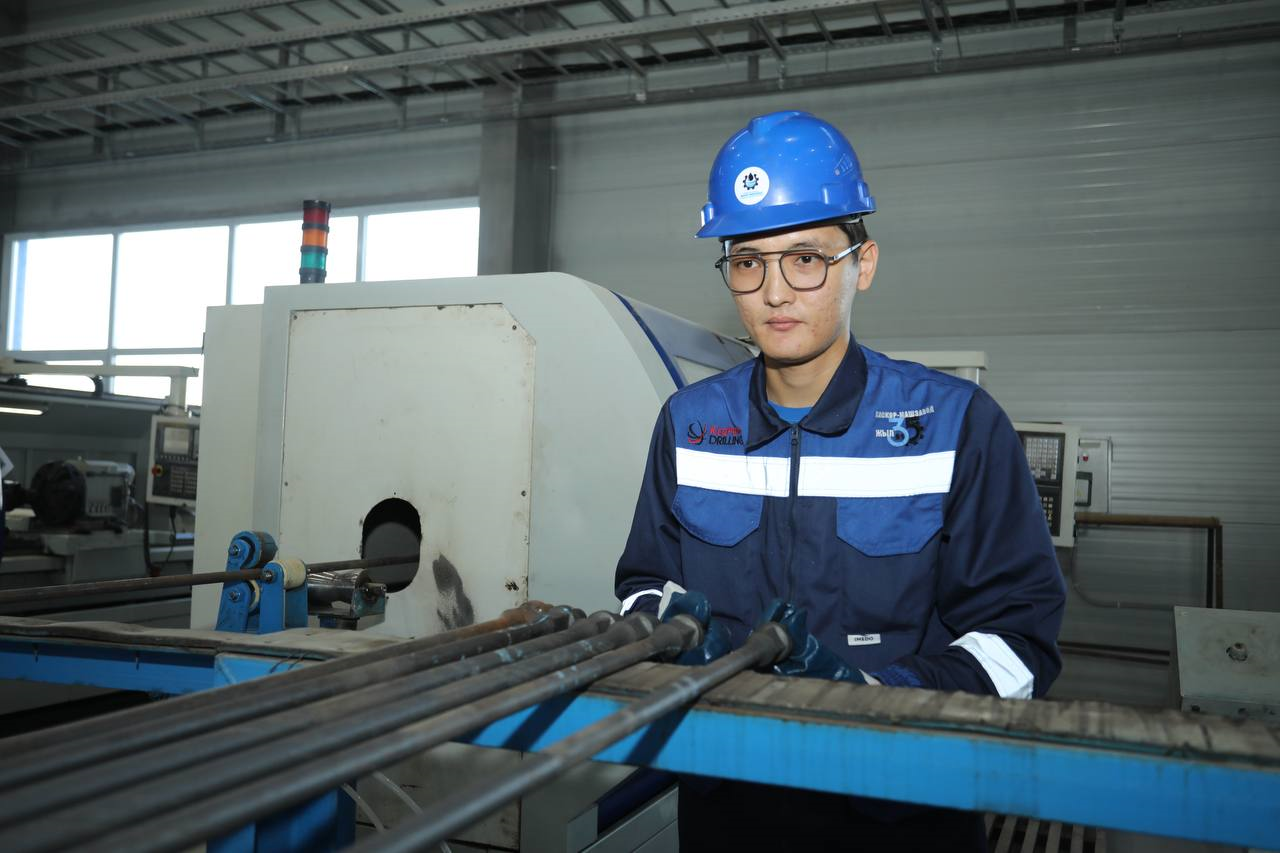
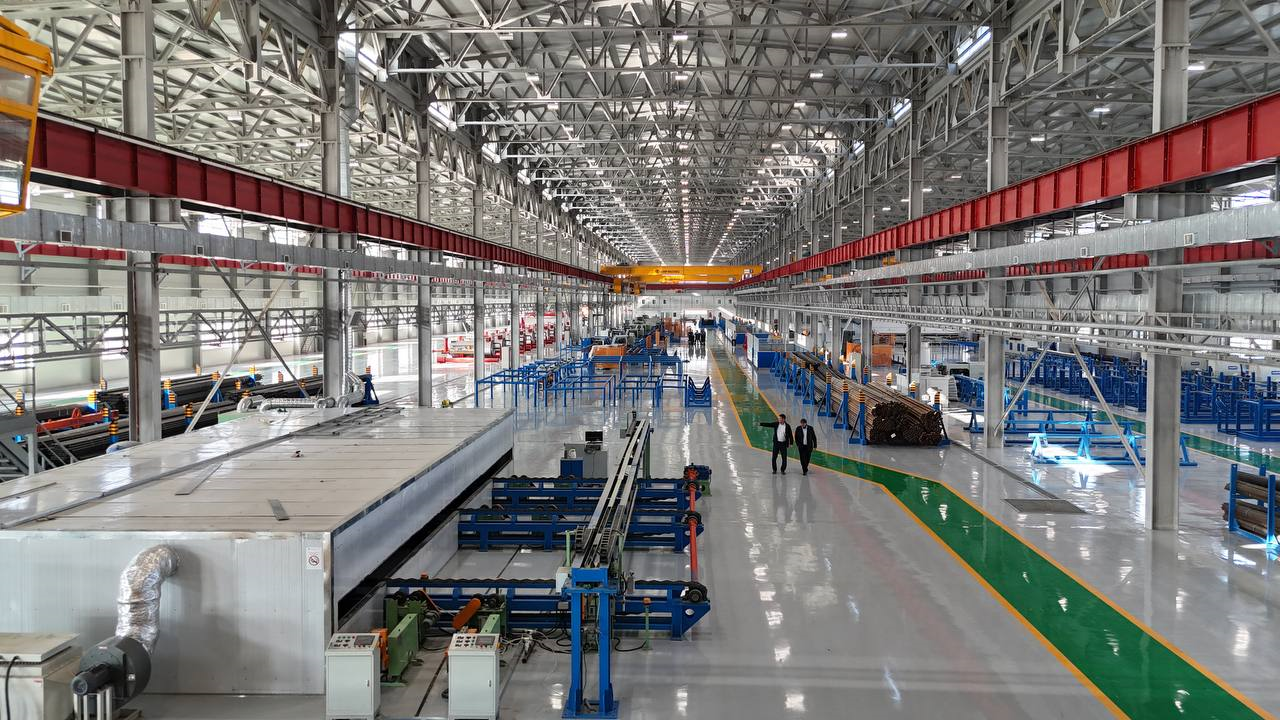
A plant for the oil and gas industry in Zhanaozen began operations last year. The enterprise was established to create a full-fledged production base in Kazakhstan for the oil and gas machine building sector and to reduce the industry’s dependence on imports. It was opened as part of a localization program, which helped create jobs for residents of this oil town and develop local human resources.
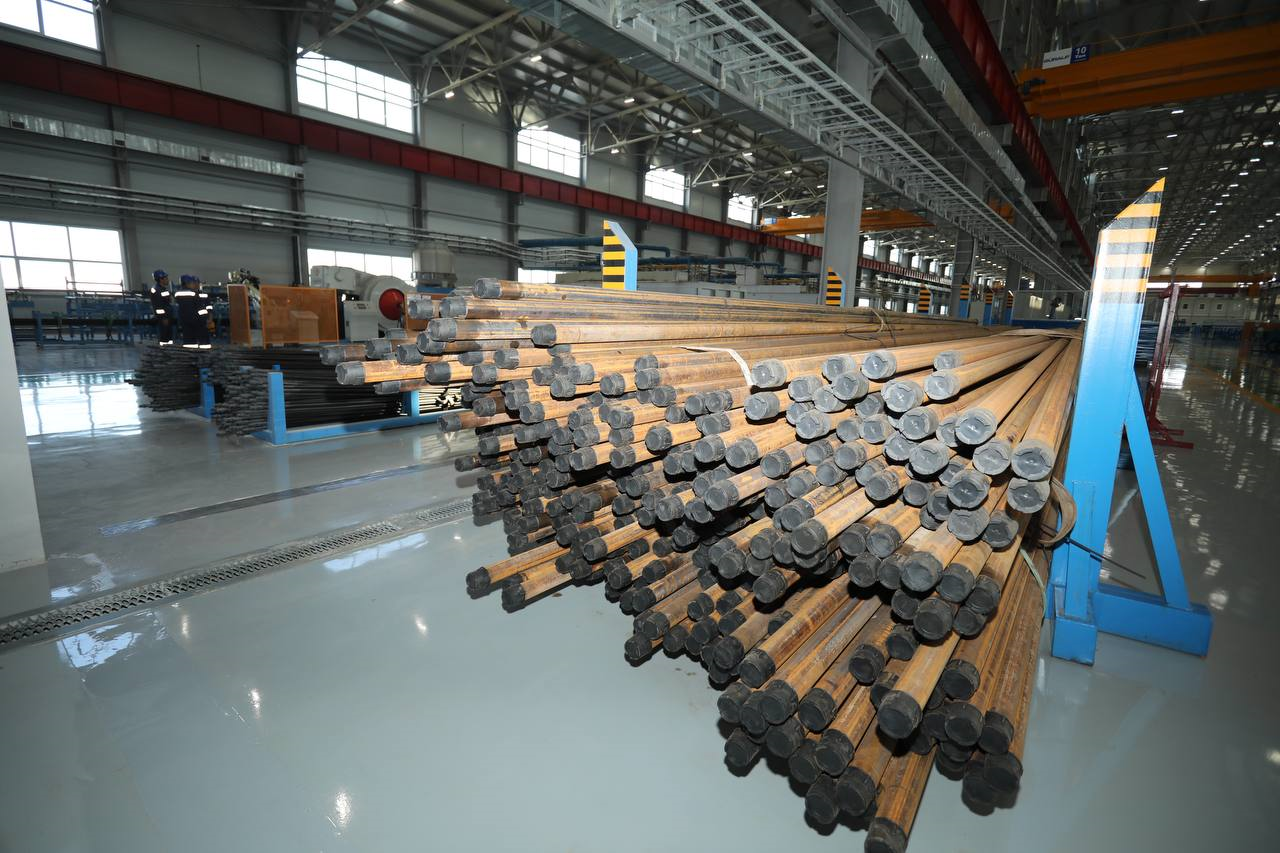
Today, the plant manufactures sucker rods, line heaters, wellhead heaters, storage equipment, and pipe products. The level of Kazakhstani content here reaches 50–65%, including the use of local materials, components, and labor resources. The share of domestic personnel is 100%.
“Our main clients include leading oil and gas companies in Kazakhstan, such as Ozenmunaygaz JSC, Karazhanbasmunai JSC, and other major operators and service companies in the industry. The plant’s production capacity is up to 540,000 sucker rods, up to 16,000 tons of tubing, and more than 200 units of oilfield equipment per year ”.
“Currently, the plant’s capacity utilization stands at 40–50%, and in certain areas we have already reached 80% of design capacity, which allows us to fully fulfill orders from our key clients”.
The total number of employees is approximately 307.
“At the same time, production personnel account for more than 70% of the workforce, which speaks to the company’s strong industrial focus,” notes Yerbol Aitov, Vice President for the Mangistau Region at the KazPetroDrilling Group of Companies.
The company is capable of meeting 70–80% of the demand for key product lines, and in several areas, it is one of the leading domestic suppliers, ensuring a stable and high-quality supply to the region’s oil and gas industry.
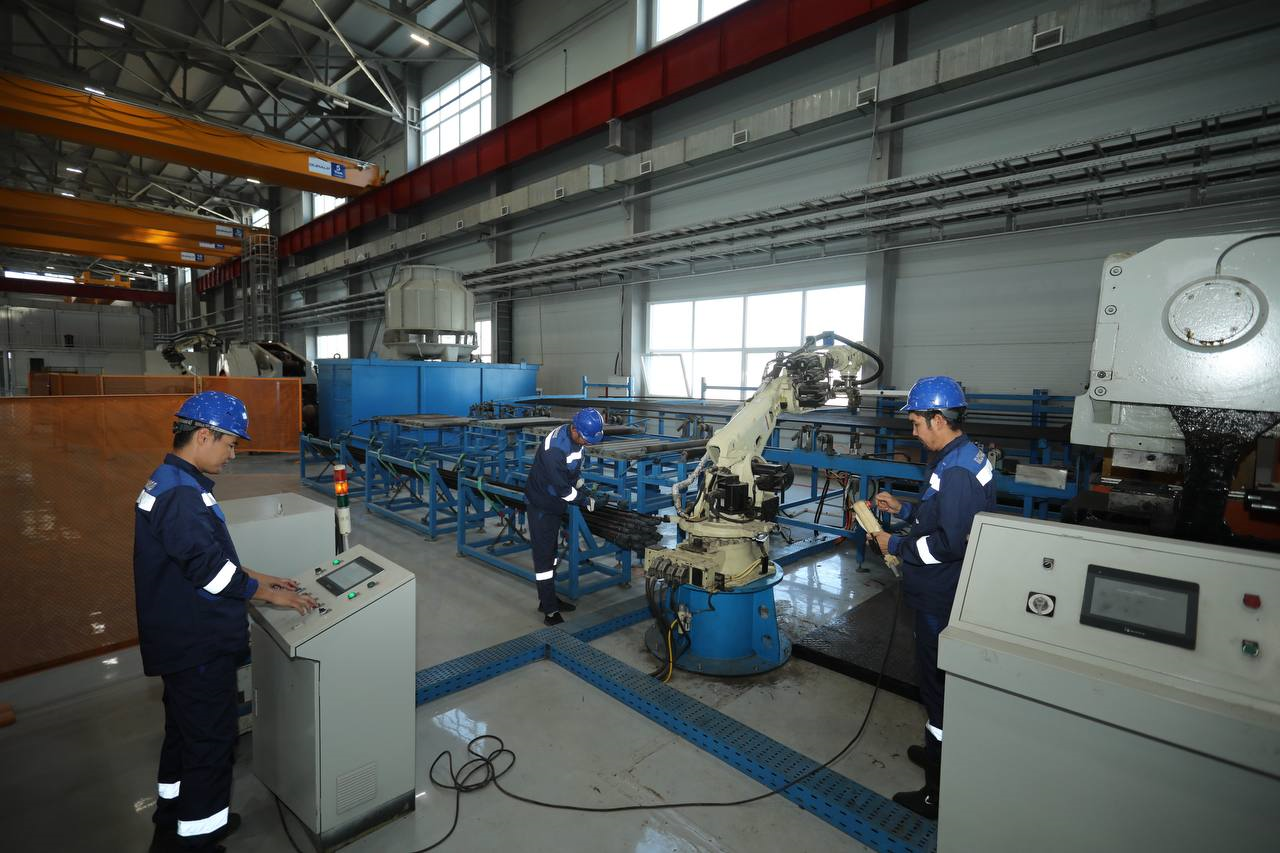
“We are implementing modern metalworking and welding technologies, as well as utilizing automated production lines, anti-corrosion and protective coating technologies, and quality control systems at every stage of production. This allows us to increase the service life of our products by 20–30% compared to standard solutions. The level of production automation is approximately 70–80% for key operations. This allows us to reduce production costs by up to 15%, ensure consistent product quality, and minimize the human factor. In addition, we are implementing digitalization elements: equipment monitoring systems and production performance analysis. In the next few years, we plan to implement AI solutions for predictive maintenance, automated quality control, and production process optimization,” adds Yerbol Aitov.
At the same time, the company notes that completely replacing manual labor is impossible, since even with a high level of automation, human involvement will still be required, especially in terms of quality control, equipment setup, and engineering solutions. They emphasize that the main trend is not replacement, but rather enhancing the role of humans through technology.
Over the next five years, the company plans to increase production capacity by at least 30–50%, raise the level of domestic content to 90%, expand its product line, enter the export market (up to 20–25% of total volume), and implement digital and AI solutions.
The Role of the Association of Kazakhstan Machinery Industry in Supporting Domestic Enterprises
Today, the Association’s main task is to represent the industry’s interests and help enterprises build a predictable environment for investment, modernization, and entry into new markets.
“Work is being carried out in several key areas. These include promoting industry initiatives at the level of the Government and relevant state agencies, participating in the implementation of the Comprehensive Plan for the Development of the Machine-Building Industry for 2024–2028, preparing proposals for systematic localization and the development of the component base, facilitating the introduction of off-take contracts and other long-term procurement mechanisms that ensure sales and enable production planning; facilitating access to domestic raw materials and supplies, reducing dependence on imports, and enhancing product competitiveness; developing preferential financing and leasing for production modernization; developing human resources, including expanding dual education, collaborating with colleges and universities, training engineers and skilled workers for the industry, supporting programs for deep localization and the implementation of industrial robotization, and organizing the annual Machine Builders’ Forum as an industry platform for cooperation and developing joint solutions,” - notes the Association of Kazakhstan Machinery Industry.
The potential for increasing exports in the industry is significant, the Association notes. Kazakhstan has already established expertise in railway and electrical engineering, agricultural machinery manufacturing, and certain types of oil and gas equipment. In the oil and gas engineering sector, the production of pumps, compressors, valves, and pipeline equipment is developing. This will allow for the replacement of imports and an increase in technological independence.
About the Forum of Kazakhstan Machinery Manufactures
These and other issues will be discussed in the coming days at the 13th Forum of Kazakhstan Machinery Manufactures. It will take place on April 2 and 3 in Astana.
The Forum has traditionally served as the main platform for dialogue between the government and the business community to develop a conceptual vision for the development not only of the machine-building sector but also of the country’s manufacturing industry as a whole.
The main objective of the forum is to develop practical proposals and recommendations for the further development of the industry and the enhancement of its competitiveness.
Participants will discuss issues such as the development of industrial cooperation and localization, the implementation of robotics and digital technologies to increase labor productivity, the improvement of government support measures, the expansion of export potential,
Kazakhstan’s investment potential and the role of foreign partners in the development of the machine-building industry, personnel policy, and the training of specialists for the machine-building industry.
In addition to the plenary session, panel and breakout discussions will be held to examine specific initiatives aimed at strengthening the national manufacturing base.
Source: otpannews.kz